
For the past few weeks I have been working on what I hope will be the final draft of my latest novel. I began writing it with the intention of focusing on the race riots in Hull in the mid-summer of 1920. Early on it became evident there was insufficient historical detail of the event for me to simply fictionalise it. The participants have left few traces. The novel is my fictionalised take on what may have happened.
The characters are therefore imagined. Two of them are a married couple who get caught up the riots, becoming witnesses to an event which otherwise wouldn’t have involved them.
The story is about a couple who married three weeks before the husband volunteered to enlist. Their courtship had lasted two years. They had never lived in their own house, nor lived on their own. When the husband is demobbed, he cannot speak. His wife was looking forward to holding in her arms the man she had married. She barely recognised him.
I planned to write a novel in which they fell in love again, and the first word he spoke, was his wife’s name.
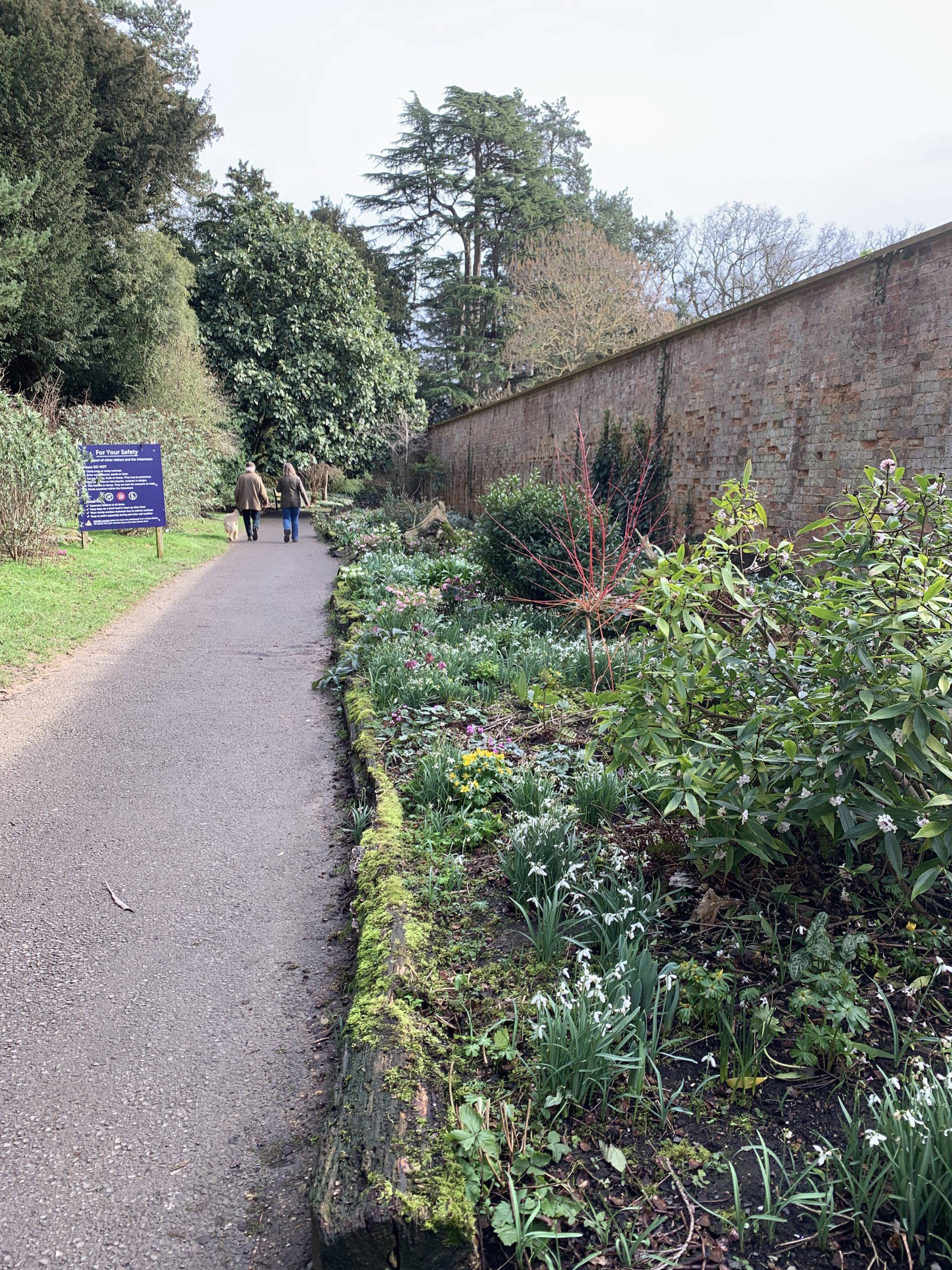 On a warm February morning we walked round Batsford Arboretum
What we saw and enjoyed was different from the four year old playing Pooh sticks and running under a waterfall with great glee. He hoped to get very wet.
By the time I finished the third draft, I realised this wasn’t going to be feasible. Trauma whatever the cause is embedded in the body and its treatment is slow. Riots were outside the experience of this couple and would be shocking.
In researching trauma and the military, I came across Dr. David Jackson’s website. He was a veteran of the war in Argentina, as a result of which he suffered PTSD. Shell shock was known in 1914- 18, but few private soldiers received treatment. Knowledge of trauma has developed since then in any case. Dr. Jackson received therapy, but it wasn’t for several years he learned this wasn’t entirely appropriate for him. He studied, eventually getting a PhD.
The breakthrough for him came when he took part in a theatre production called Minefield. It involved 3 Argentine veterans, 2 Royal Marine veterans and 1 Ghurka. All were veterans of what we call the Falklands War.
My novel is set during one day. There is no way my ex-soldier could do more than begin the process of recovery. I needed to re-fine the plot because fiction needs to be as authentic as life.
Another development came through my reading of a familiar poem: Those Winter Sundays by Robert Hayden. In the poem the narrator describes his father’s loving acts towards his son. The man works hard to provide for his family and every Sunday makes the fire so that the house is warm when his son gets up.
In the novel, the husband returns home from work where his wife is usually waiting for him. Every work day she makes him soup and she stands ready with the ladle in her hand, ready to serve him after his early shift in the woodyard. He depends on that routine to help him cope with his terrible memories of the war. He returns to a cold house, the uncooked vegetables for the soup in the pan on the draining board. It is a pivotal moment for him that I missed in the earlier draft.
Rewriting allows me to see the novel with fresh eyes, if I stay open to the reality of life in 1920. And less inclined to wishful thinking!
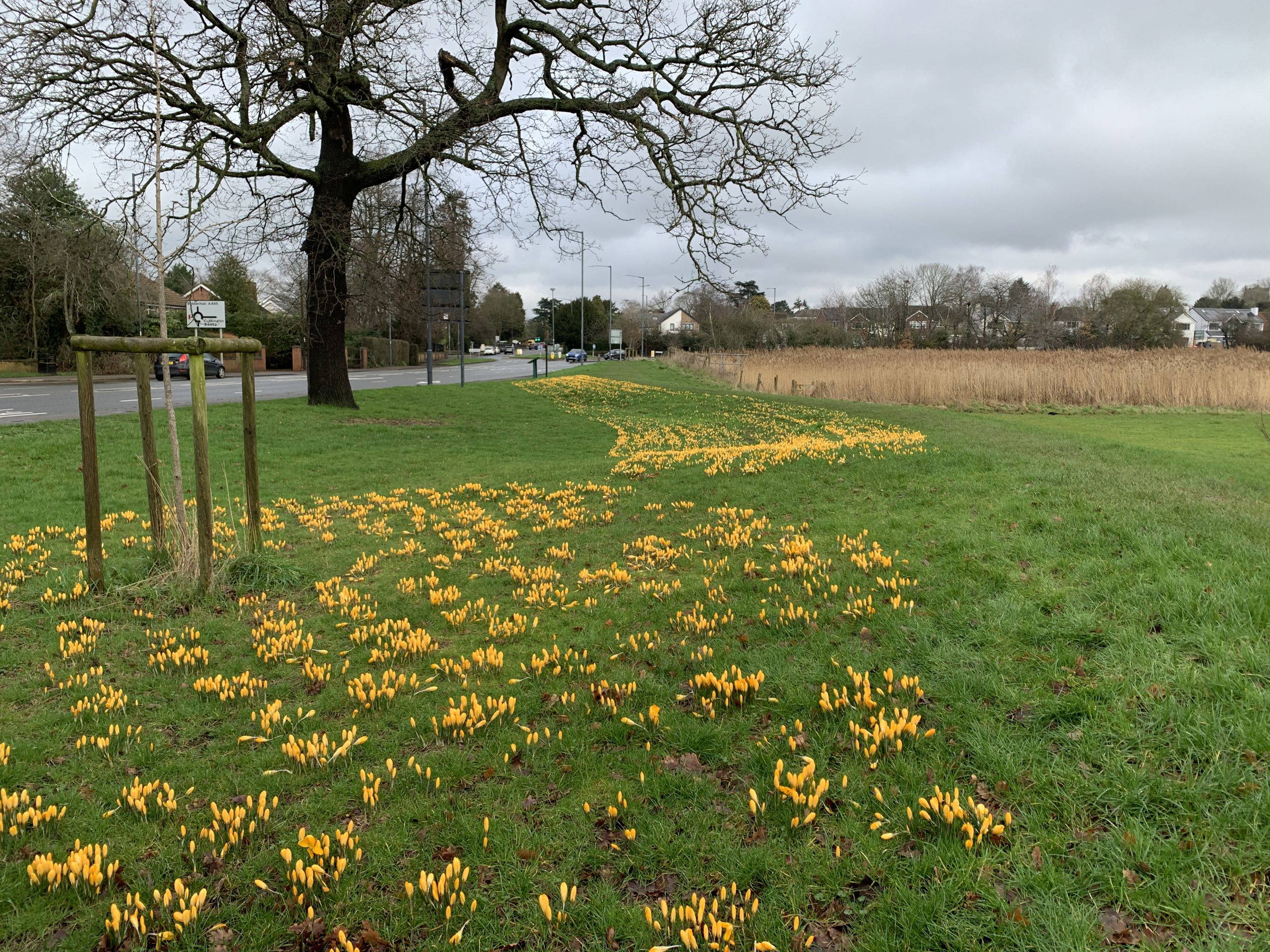 Crocuses by the Midland Oak Leamington Spa
Reading: Crisis by Frank Gardner. A thriller which was a change from my usual read. A page turner. The poem whose title is quoted above can be found in : 44 Poems on Being with Each Other, edited by Pádraig ÓTuama. I’ve just started Hilbre Island by John Gough, a local writer I met at Amanda Smyth’s Short Story club and In the Castle of My Skin by George Lamming
I visited The Stoneleigh Arms on Clements Street in Leamington. It has been converted into an art studio where my friend, Jeanette Sheppard work was one of the works exhibited during February. It’s a spacious venue with lots going on. https://stoneleigharms.com/
Research into Trauma in the military. Dr David Jackson may be found on the following link:- In Conversation with Dr. David Jackson: /https://defenceresnet.org/ic-david-jackson/
Thanks, Marg. Good to read.
Thanks, Jonathan. On we go!